À la Poupée Printmaking Process | Steel Plate Etching
Inking a Plate À la Poupée: Building Colour by Hand
There is something intimate about inking a plate à la poupée.
Unlike rolling a single colour across the surface, this method asks for touch, patience, and presence. Each area is inked by hand using small fabric pads — “poupées” — allowing colour to sit precisely where it is wanted.
This still life plate became an exploration not just of colour, but of restraint. Of building slowly.
Below is the process.
Stage 1: Establishing the Base
I had initially laid down a combination of burnt umber and bone black around the frame area and distant background in the top section of the image
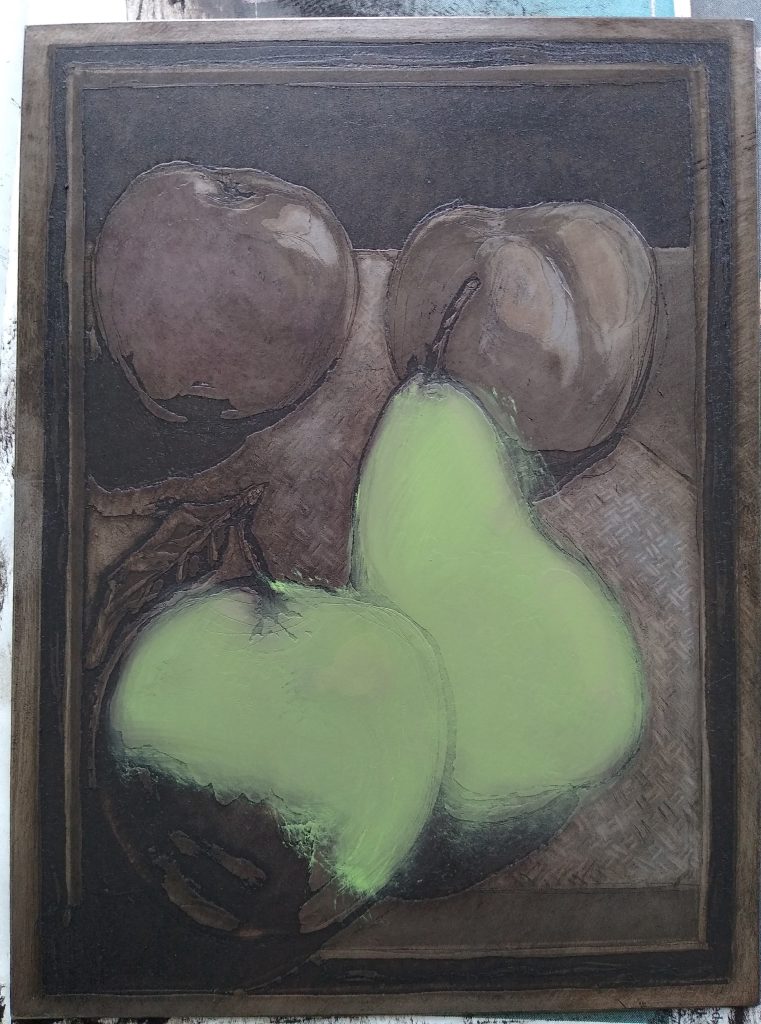
The plate begins in a muted state — the etched drawing visible, but quiet.
At this stage, I introduce the first soft tones into the pears and apples. A gentle green begins to sit in the bitten lines and shallow textures. The bespoke mix uses opaque white to give a solid colour block over the fruit in the forground.
This moment feels tentative. The colour is a suggestion rather than a declaration.
Inking à la poupée requires care — pressing pigment into the etched marks without overwhelming the subtlety of the drawing.
Stage 2: Introducing Warmth
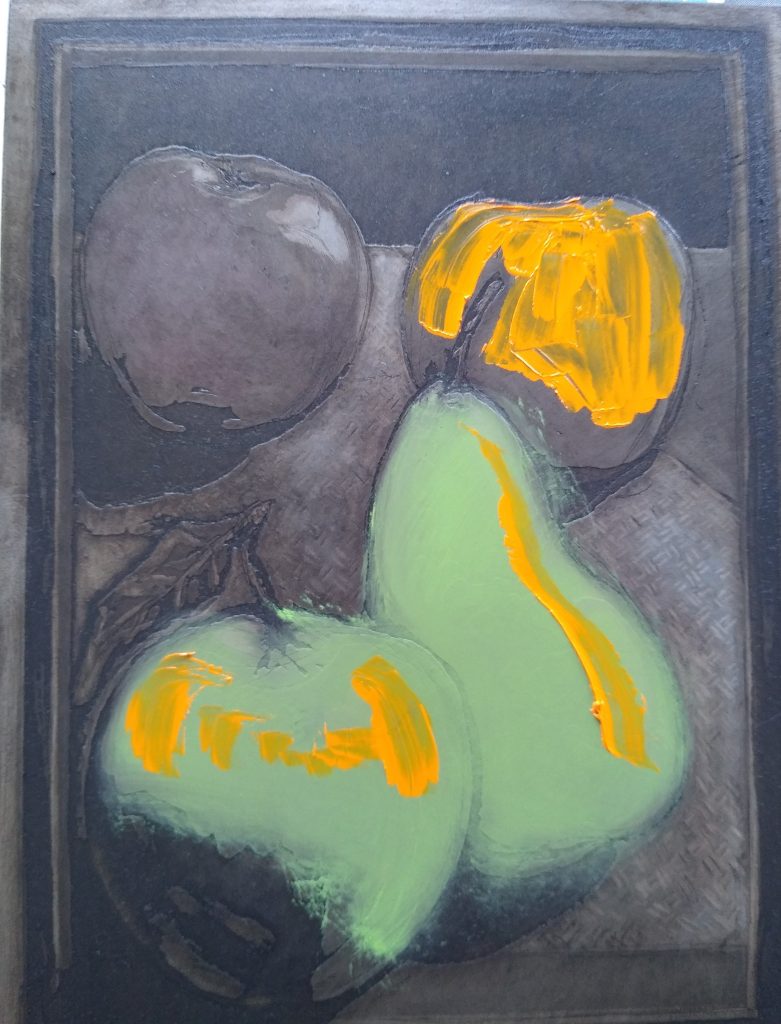
The second stage brings warmth.
Apricot yellow, warm yellows and ochres, are worked into the pale green. Small strokes of richer pigment begin to define form and light.
Because each colour is applied separately, I move slowly between areas — wiping edges clean, reapplying where needed, softening transitions with cloth.
The plate begins to breathe.
There is something calming about this repetition — dab, press, wipe, soften. It demands full attention. The outside world quiets.
Stage 3: Deepening Tone
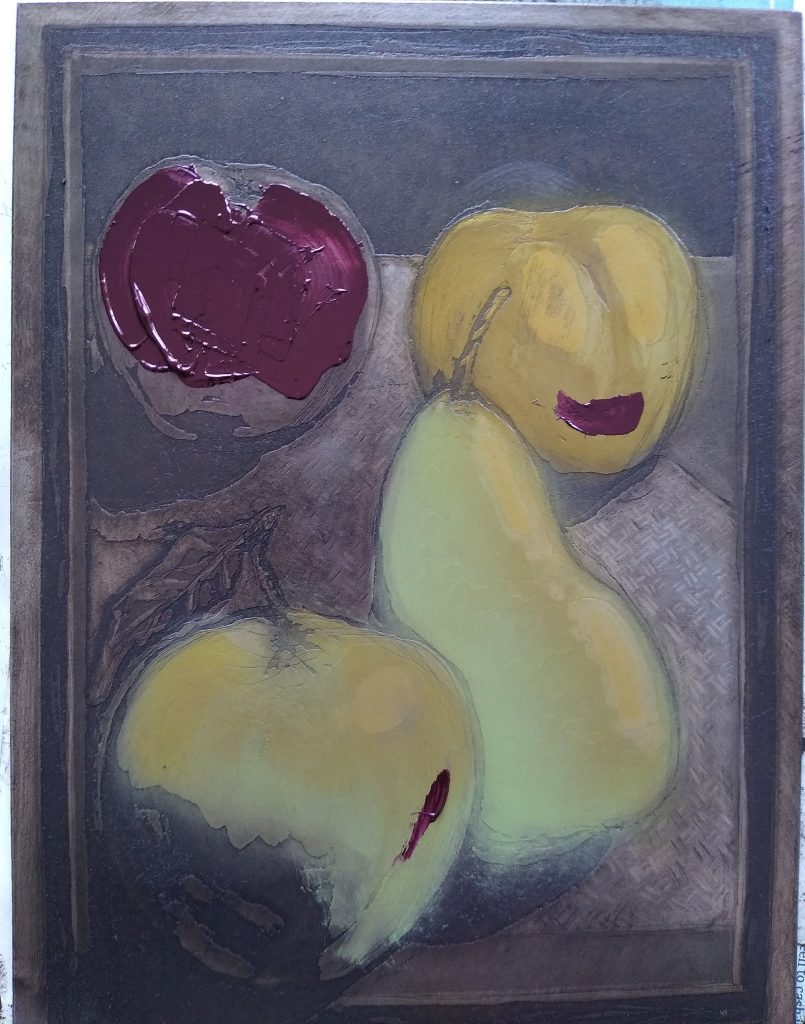
Now the colours strengthen.
Solferino violet, a juicy plum red is stroked on to the side of the apple and the apricot giving them a warm blush. The plum is drenched in the semi translucent ink. Contrast begins to form between foreground and background.
This is the stage where balance matters most. The colours blend into one another. The suggestion of the colours reflecting off each piece of fruit. Too little and the image feels faint.
Working à la poupée feels almost like painting inside engraved lines. It is controlled, but still tactile and human.
Imperfections remain — and I allow them.
Stage 4: Activating the Background
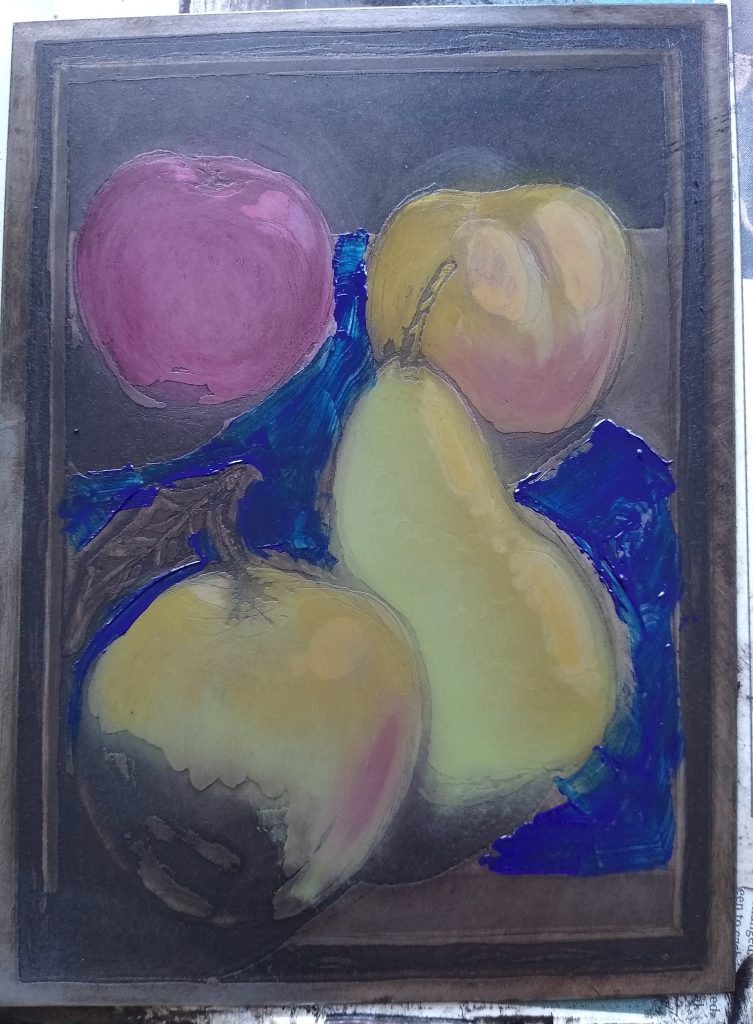
Finally, the background shifts.
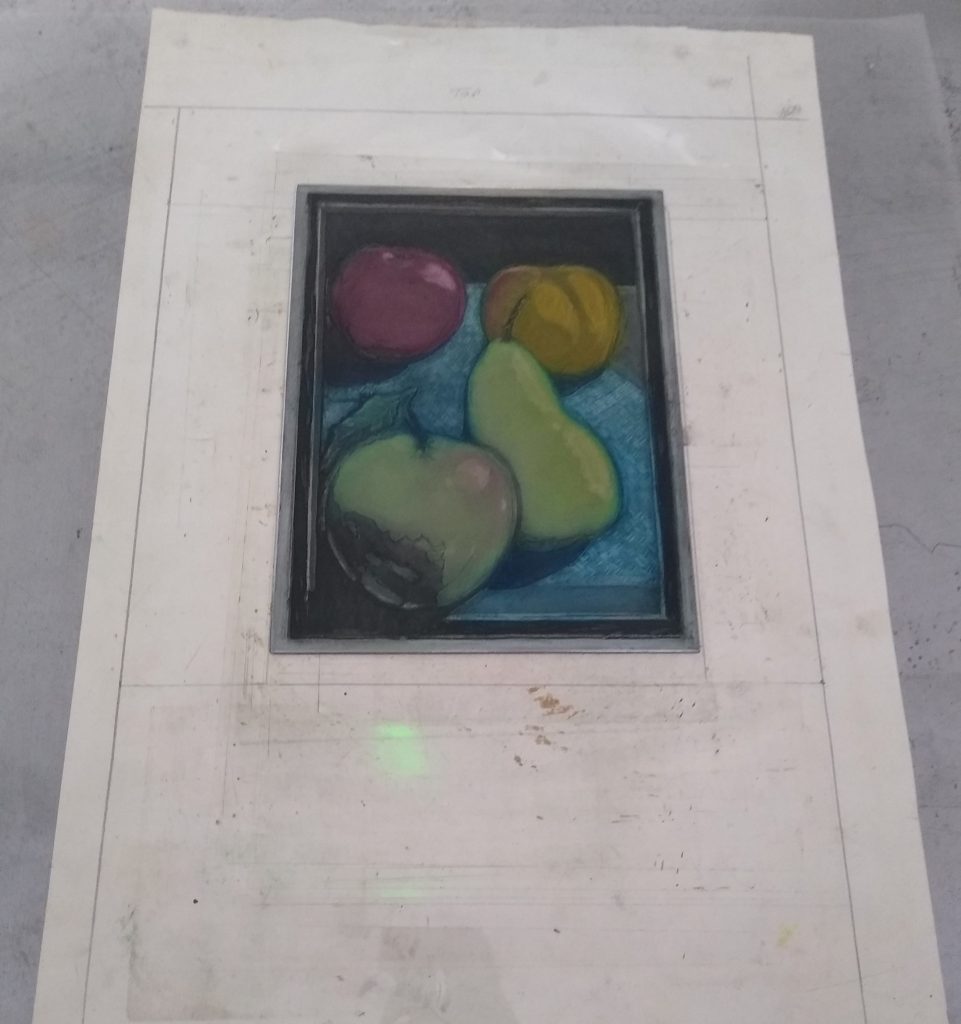
A bold blue is introduced around the fruit, pushing the forms forward. The leaf is given a blue green mixed on the plate. The still life gains energy and tension.
This final stage transforms the mood entirely. What began as earthy and muted becomes vivid and present.
The beauty of à la poupée is that all of this colour lives on a single plate. No multiple plates. No separate passes. Just careful placement and thoughtful wiping before printing.
Apple, Pear, Apricot, Plum
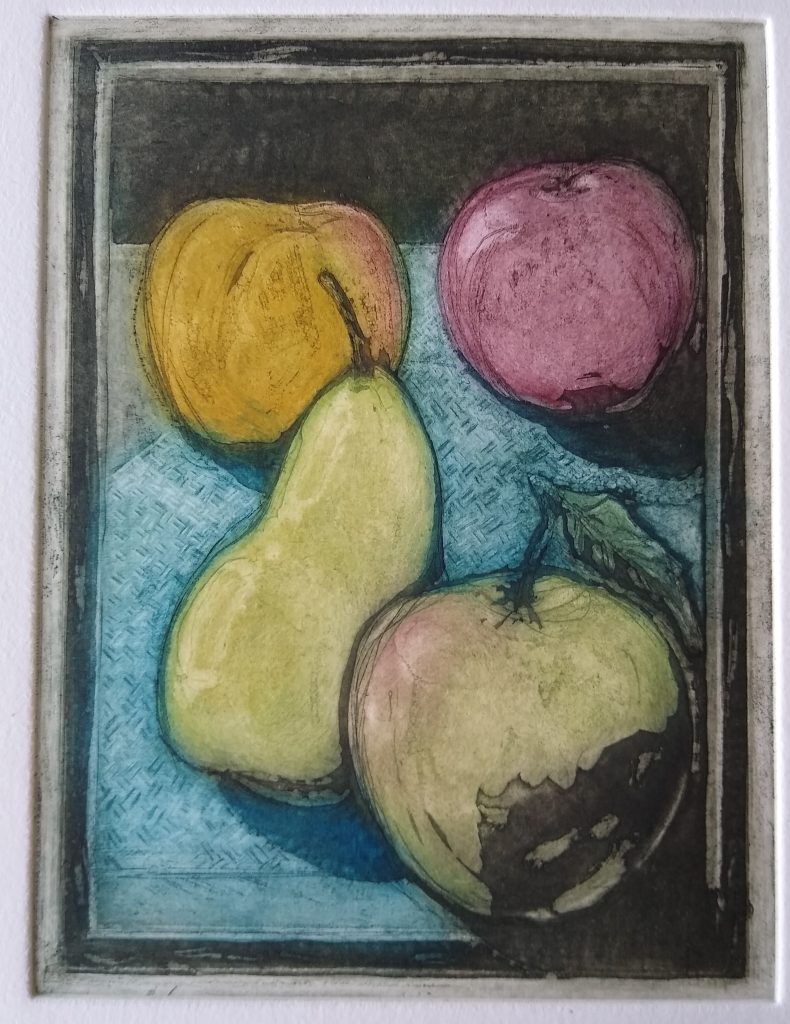
https://www.greenwichprintmakers.co.uk/product-page/ruth-greenwood-apple-pear-apricot-plum
Ruth is a member of Thames Side Print Studios and her work can be found at Greenwich Printmakers Gallery, 1 Greenwich Market, London, SE1